


AWS makes launching easy. Keeping things stable under real load? That’s a different story. Most systems crash not at the start but during growth phases. Latency spikes, unexpected downtime, and scaling bottlenecks become real problems fast. You need partners who build reliable systems, not just spin up infrastructure.
Why High-Load AWS Systems Fail in Production
We see the same failure patterns across hundreds of AWS environments. Teams often configure autoscaling wrong or miss database bottlenecks entirely. Caching strategies break under peak traffic, and single points of failure hide until it’s too late. According to our data, most outages trace back to predictable issues.
Common failure points include:
- Autoscaling policies that react too slowly to traffic spikes;
- Database connection pools exhausting under concurrent load;
- Cache invalidation logic failing when patterns shift suddenly;
- Single points of failure hiding in cross-region dependencies;
- Load testing missing realistic user behavior scenarios;
- Latency growing non-linearly as partitions fill up.
So you pay for AWS. But stability remains out of reach.
What Mission-Critical AWS Architecture Actually Requires
Building for mission-critical workloads means assuming things will break. The question is whether your system survives when it happens. Good architecture doesn’t prevent failures, it contains them. According to our analysts, several non-negotiable components separate reliable systems from fragile ones.
Essential requirements include:
- Multi-region deployment with automatic traffic failover;
- Fault tolerance at every service boundary, not just the database;
- Load balancing that understands application-level health, not just TCP;
- Observability covering logs, metrics, and distributed traces together;
- Chaos testing that breaks dependencies on purpose;
- Disaster recovery with measurable recovery time objectives.
These elements turn AWS from a liability into a proper foundation.
Top 6 AWS Consulting Companies for High-Load Infrastructure
We selected these six firms based on their track record with production reliability, load testing, and mission-critical uptime. Each one has real cases, not just slideware.
1. Geniusee
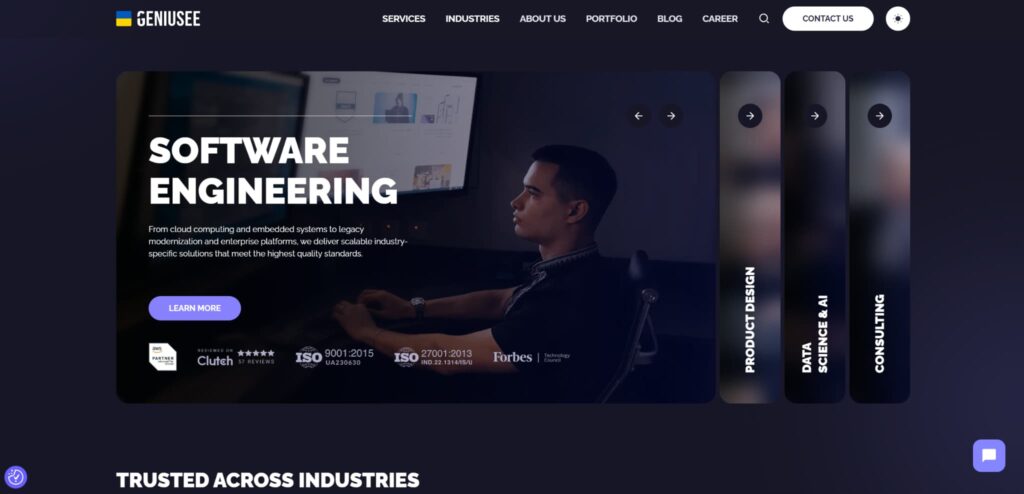
Geniusee builds high-load systems for startups that survive sudden growth. Their AWS consulting services for high-load and scalable infrastructure focus on latency control and real-time processing under pressure. A typical client comes to them after a major outage during a product launch or viral spike. The team then redesigns the architecture to handle traffic without collapsing.
Key technical strengths include:
- High-load system design for unpredictable traffic patterns;
- Performance optimization under real user behavior, not synthetic tests;
- Real-time data processing with sub-second latency requirements;
- Scalable backend infrastructure that grows without full rewrites.
We think they work best for product companies expecting rapid scaling within 6-12 months.
2. Slalom

Slalom operates as an enterprise AWS partner with deep reliability expertise. They combine business transformation work with hands-on architecture for mission-critical systems. Many Fortune 500 clients use them for cloud migrations where downtime costs millions per hour.
Their enterprise capabilities include:
- Enterprise-grade AWS architecture for regulated industries;
- Multi-region system design with active-active failover;
- Performance and reliability engineering as a dedicated discipline;
- DevOps and cloud operations with formal change management.
Maybe overkill for small teams, but solid for large organizations.
3. EPAM Systems
EPAM Systems focuses on building large-scale distributed systems on AWS for enterprise and high-growth products. They work with companies that can’t afford downtime or performance issues, especially in finance, retail, and digital platforms. Their strength is in engineering complex systems that stay stable under real production pressure, not just in theory.
What they bring to high-load environments:
- Distributed system architecture designed for massive traffic loads;
- Performance optimization for latency-sensitive applications;
- Scalable data processing across multiple AWS services;
- Resilient infrastructure with built-in fault tolerance and recovery.
Honestly, they are less about trendy cloud setups and more about systems that actually survive under stress.
4. Grid Dynamics
Grid Dynamics excels at high-load systems in retail and streaming media. They handle Black Friday traffic and live video spikes without breaking. Performance testing at scale is their signature move.
Their high-load specializations include:
- High-load data processing for event-driven architectures;
- Real-time analytics platforms processing millions of events per second;
- Low-latency architecture design for sub-100ms responses;
- Performance testing simulating peak traffic before it happens.
According to our data, their retail experience is unusually deep.
5. Rackspace Technology
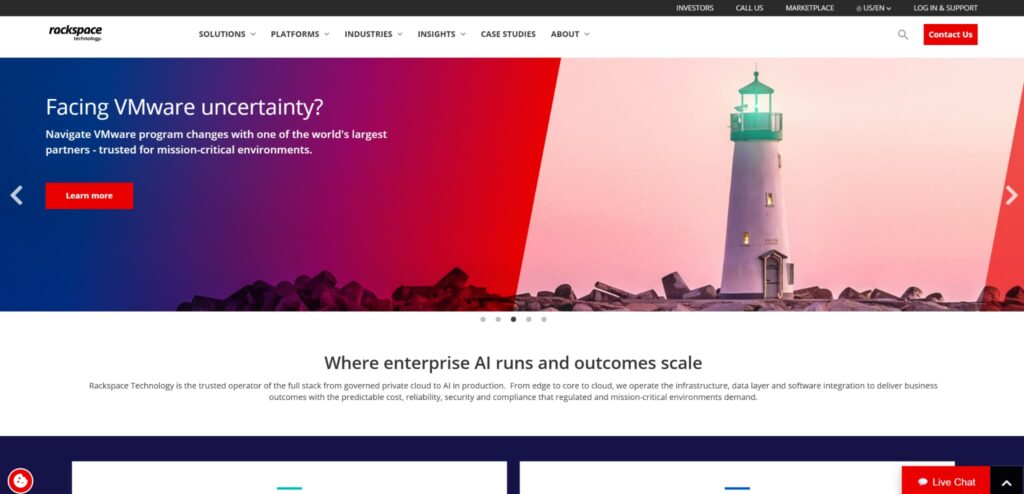
Rackspace Technology offers managed cloud with a strong uptime guarantee. They run 24/7 operations for companies that lack internal DevOps teams. Not a pure consultancy, but reliable for keeping critical systems breathing.
Their managed approach includes:
- 24/7 cloud operations with real human response;
- Disaster recovery planning tested twice per year minimum;
- High-availability infrastructure with SLA-backed uptime;
- Managed AWS environments including patching and monitoring.
A safe choice if you want to outsource the operational grind entirely.
6. Mission
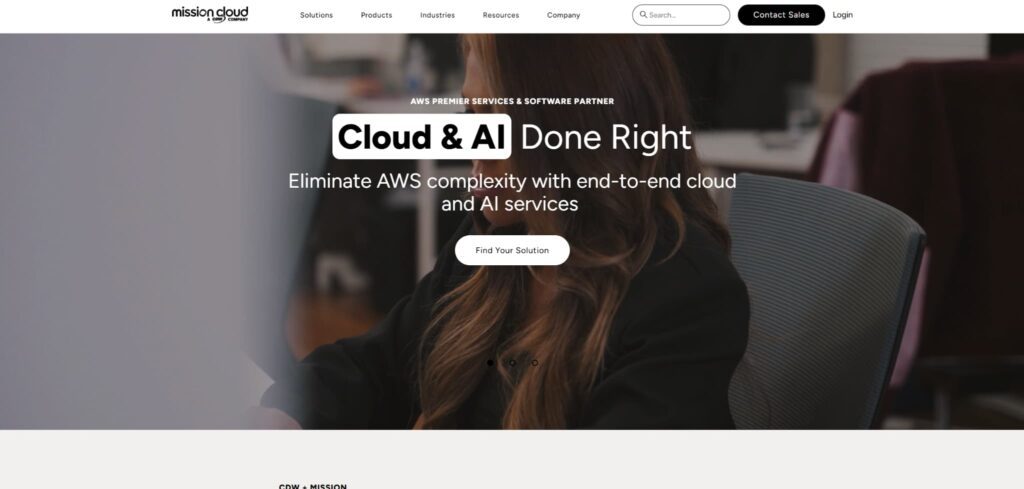
Mission focuses exclusively on AWS architecture optimization for scale. They don’t do multi-cloud or hybrid. Just AWS, but done right for reliability and uptime.
Their AWS-specific capabilities include:
- Architecture optimization for scaling past 1mn concurrent users;
- Reliability engineering with measurable error budgets;
- Monitoring and observability systems that actually alert on root causes;
- Continuous infrastructure improvement through automated remediation.
We think they punch above their weight for mid-market companies.
How to Choose an AWS Partner for High-Load Systems
Picking a partner for high-load work feels different from regular consulting. You need proof, not promises. According to our analysts, the right evaluation questions include:
- Do they have verifiable high-load experience at your scale tier;
- Have they built fault-tolerant systems that survived real outages;
- Can they share production cases with metrics, not just anecdotes;
- How do they approach downtime prevention versus recovery;
- Do they bring monitoring and observability as part of the package.
Ask for load test results from previous clients. Then ask what broke anyway.
Final Thoughts
High-load isn’t about launching. It’s about surviving when traffic hits. The right partner turns AWS into a stability multiplier. The wrong one leaves you debugging at 2 AM during a revenue spike. Choose based on proven failure handling, not pretty architecture diagrams.